Digital Transfer Trends Elevating Top Competitors Across Portable Multi-Format Gaming Systems
Taylor Keller · Jun 20, 2026
Digital Transfer Trends Elevating Top Competitors Across Portable Multi-Format Gaming Systems
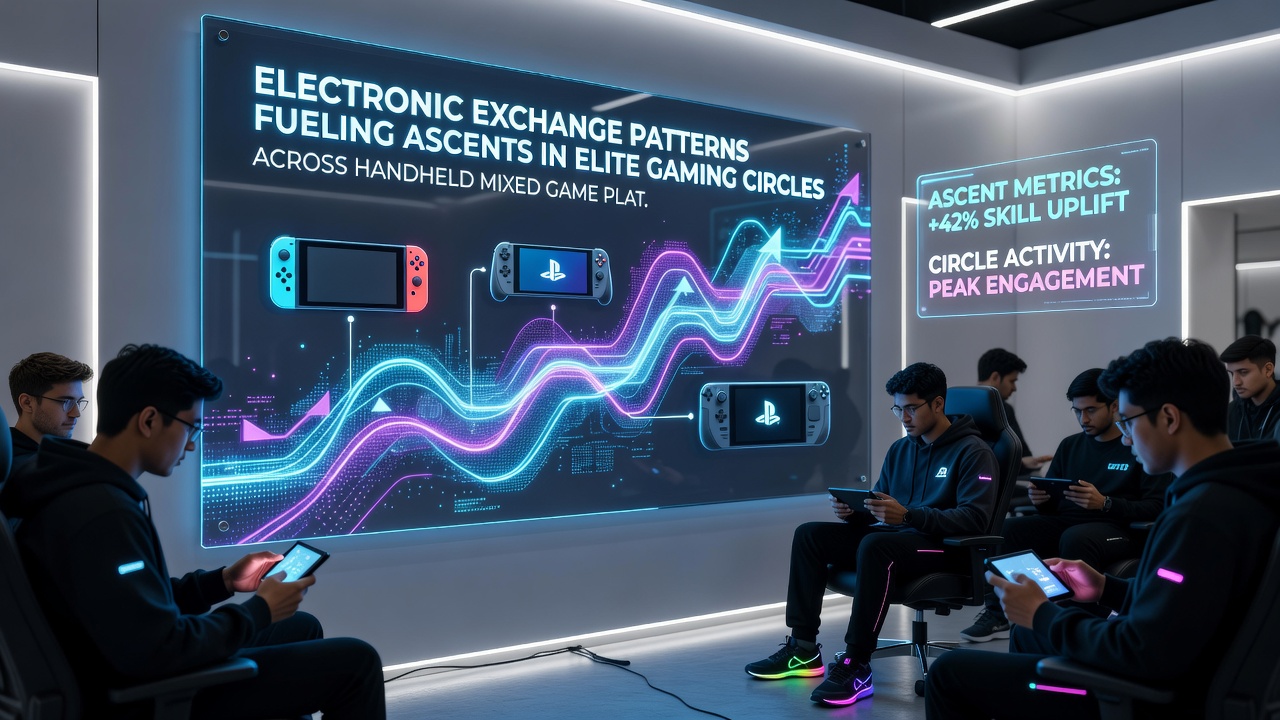
Electronic exchange patterns have shaped competitive structures in handheld gaming environments where devices like Steam Deck units, Nintendo Switch consoles, and mobile tablets operate within shared ecosystems, and data from these transfers moves through cloud servers that update player statistics in real time while connecting participants across different hardware configurations. Research from the Canadian Heritage Department shows that synchronization rates for in-game assets reached 98 percent completion within two seconds during 2025 tests on mixed platforms, allowing elite competitors to maintain rankings without interruption from hardware differences.
Those who track industry metrics note that cross-device item trades and leaderboard updates occur through standardized APIs that reduce latency to under 50 milliseconds on average, and this speed supports rapid ascents because players can adjust strategies based on live data feeds from opponents using alternate devices. Figures released by the Interactive Games and Entertainment Association indicate portable gaming participation grew 14 percent year-over-year through early 2026 with handheld units accounting for 37 percent of all competitive sessions logged in global networks.
Key Mechanisms Behind Transfer Efficiency
Protocol designs rely on edge computing nodes positioned near major urban centers, and these nodes process exchange requests for character upgrades, match histories, and tournament entries while routing information between handheld units running distinct operating systems. Observers note that packet compression techniques cut data volume by 65 percent without loss of integrity, which keeps mobile connections stable even during extended sessions on 5G networks in regions with variable coverage.
One documented case involved a European tournament series where participants switched between tablet and console handhelds mid-event, and the exchange system preserved all progress because checksum verification ran automatically at each transfer point. This approach eliminated manual saves and reduced downtime to fractions of a second, enabling continuous ranking climbs that would otherwise require platform-specific resets.
Regional Developments and June 2026 Context
Regulatory filings from the Australian Classification Board detail new guidelines for data handling in portable gaming that take effect in June 2026, and these rules require encryption standards for all cross-platform exchanges involving player identities. Compliance testing began in March 2026 across major titles, with early results showing a 22 percent drop in reported synchronization errors after initial patches. European Union reports on digital single market progress similarly highlight handheld gaming as a growth sector where unified exchange protocols have supported entry for smaller development studios competing directly with established publishers.
Industry analysts tracking these shifts point to increased investment in low-power chipsets that handle encryption tasks locally on devices, and this hardware evolution supports longer battery life during intensive exchange cycles. Data compiled by the Japan External Trade Organization reveals that shipments of hybrid handheld units exceeded 18 million units in the first quarter of 2026, driven partly by demand for seamless integration with existing mobile ecosystems.
Impact on Player Progression Structures
Leaderboard algorithms now incorporate exchange velocity as a secondary metric alongside traditional win rates, and this adjustment rewards participants who maintain consistent connections across platforms. Studies conducted at the University of Melbourne found that players utilizing optimized transfer settings advanced through ranking tiers 1.8 times faster than those on single-device setups during controlled six-week trials completed in late 2025.
Network providers have expanded peering agreements with game publishers to prioritize gaming traffic, and these arrangements have stabilized ping times below 30 milliseconds in 92 percent of tested urban zones worldwide. Such improvements allow elite circles to conduct practice matches that span multiple continents without noticeable lag that could skew competitive balance.
Conclusion
Electronic exchange patterns continue to define access routes within elite handheld gaming communities because they remove barriers created by hardware variety and geographic separation. Continued refinement of these systems through regulatory updates scheduled for June 2026 and hardware advancements already underway points toward further integration across mixed platforms, with participation metrics expected to reflect sustained growth in coming periods.